A Pinch of Magick, A Dash of Danger
A Pinch of Magick, A Dash of Danger: Making the Domestic Feel Epic, and the Epic Feel Personal
Picture the smell of sizzling garlic and wild mushrooms drifting through a pine forest—a smell that makes your stomach growl and your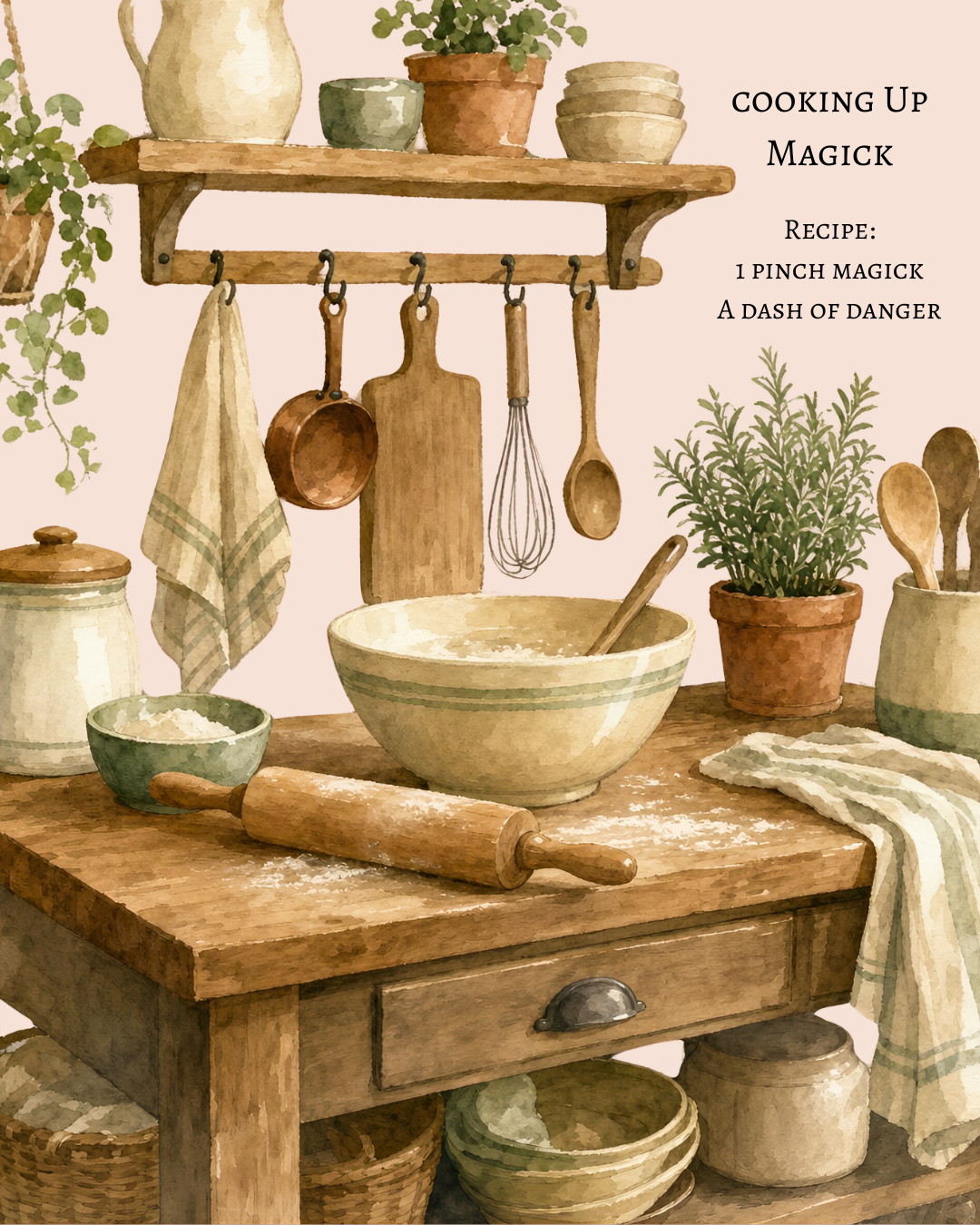 mouth water. Now picture that same delicious scent hanging in the air while something enormous moves in the dark just beyond the treeline.
That tension, between the deeply comforting and the genuinely dangerous, is the heartbeat of Cooking Up Magick. I wanted to write a book about what happens when a halfling chef with a cast-iron skillet and a fierce moral compass steps out of her cozy inn and into a world that is very much trying to kill her. (Spoiler: cast-iron skillets make excellent weapons.)
Food as the Language of Home
Paisley Dell doesn’t experience the world through grand speeches or heroic declarations. She experiences it through her kitchen. When she wants to convince her aunt Higgie to let her leave Aspenwood, she doesn’t argue; she cooks. She makes baltinghommer, a dwarven comfort food that tastes like home.
I love this scene because it’s an example of what food can do in fiction that dialogue often can’t. When Paisley's two dwarf friends try her food and immediately go grab the rest of the dwarves in the inn to join them, the food crosses cultural distance in a way words can’t. It makes dwarves far from their mountains feel, for a moment, like they never left home.
That idea didn’t come out of nowhere, by the way—I stole it from real life, like where all my best world-building comes from. When I was in my 20s, I hosted a Japanese exchange student. She didn’t speak English well, and my Japanese began and ended at “konnichiwa,” so dinner most nights was basically charades with soy sauce. But one thing we could do together was teach each other our favorite foods. She taught me to wash rice until the water ran clear, which was news to me—I’d grown up learning you just rinse it, and it’s ready to cook. Sharing our recipes turned into a lovely way of bonding, learning about each other’s cultures, and making friends.
So when I sat down to build Paisley, making her a chef wasn’t just about giving her something fun to do with her hands—it was about giving her that same power: a way past the language barrier and straight to the good stuff.
Paisley’s culinary knowledge isn’t a quirky character trait bolted onto a fantasy adventure; it’s her primary way of understanding and connecting with people. She forages wild ramps and dolian tubers on the road and turns them into a sizzling stir-fry that makes Torin close her eyes in contentment. She reads a stranger’s pain and responds with walleck and a waterskin. Food in Erdea is care made tangible.
When Cozy Meets Catastrophic
The Rosebud Inn is warm. People joke and laugh around the hearth. The ale flows. Higgie rolls out pie crust with a wooden pin while Paisley argues the case for expanding the menu. If you love cozy fantasy, it’s the kind of scene that makes you want to pull up a chair and stay awhile.
And then the world outside the inn makes itself known.
I was deliberate about placing comfort and danger side by side. The shift from Aspenwood’s familiar rhythms to the open road isn’t a slow fade. It’s a change in temperature. The ancient forest Paisley enters is beautiful and enormous; trees so vast a road has been carved straight through one of them. But the beauty carries weight. The farther the group travels from home, the more the world reveals its teeth. The possibility of bandits suddenly feels very real.
That contrast isn’t accidental. The cozy elements—the cooking, the banter, the snarky cat demanding belly rubs—aren’t there to soften the dark moments. They’re there to make them land like a gut punch. When Paisley encounters the aftermath of the battle at Gastermindt, the horror hits so hard precisely because we’ve spent time in her warm kitchen first. The smell of roasting meat has become something safe. Then the wind shifts, and safety isn’t the word for it anymore. Emotional contrast is an effective tool. The coziness isn’t decoration. It’s load-bearing.
Showing Up Anyway
There’s a moment early in the book where Paisley holds her cast-iron skillet—a family heirloom called Grace—to her chest like a talisman. It’s a small gesture, sweet and almost funny. A halfling woman preparing to walk into a dangerous world, armed with a frying pan and a list of cuisines she wants to learn.
But by the time you’ve spent a few chapters in Erdea, that gesture doesn’t feel small at all. I wanted this book to make the domestic feel epic, and the epic feel personal. The world is dangerous and vast and full of ancient evil. It’s also full of sizzling garlic, warm bread, and people who need feeding. That pan—or more accurately, how she uses it—is her tool for dealing with both.
If you’re drawn to stories that balance genuine warmth with huge stakes, stories where friendship is forged over a shared meal and courage looks less like a battle cry and more like showing up anyway, I think you’ll like Cooking Up Magick. It's available for pre-order now.
And while you’re reading, if you could try any dish from Erdea, what would it be? Baltinghommer? Nordrum? The spicy mushrooms? Something from a culture Paisley hasn’t discovered yet? I’m partial to trying the dwarves’ spicy mushrooms. Spicy equals yummy in my opinion. Tell me your pick over on Instagram or Facebook—I’d love to know.